Introduction: DWBI Meaning in Text
If you’ve spotted “DWBI” in a text message, a group chat, or on social media and found yourself confused, you’re not alone. Digital slang moves fast, and abbreviations pop up in casual conversations long before official dictionaries catch up. This guide breaks down everything you need to know about DWBI — what it means, where it came from, how to use it correctly, and how it compares to similar texting shorthand.
Table of Contents
What Does DWBI Mean?
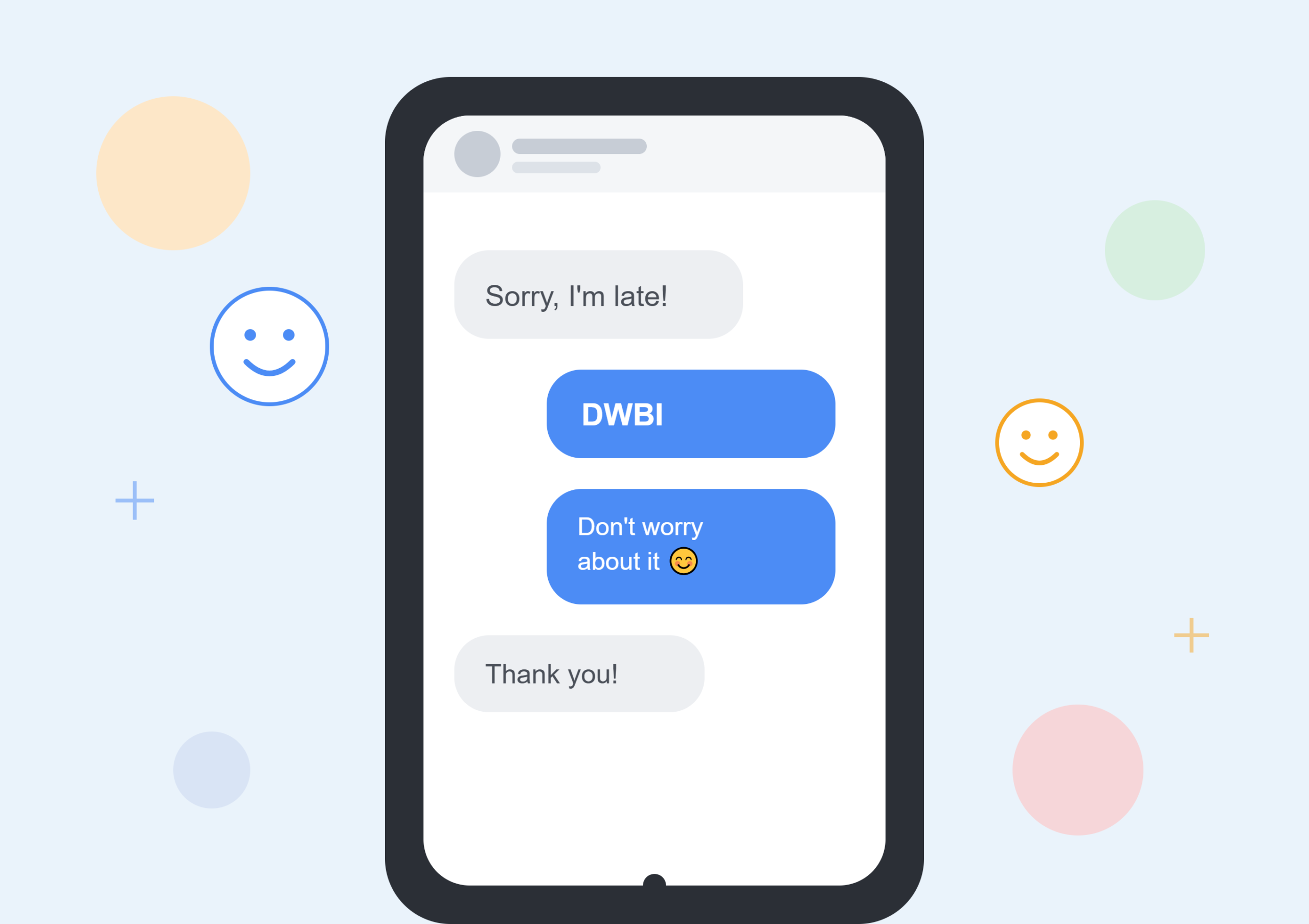
DWBI is a texting abbreviation that stands for “Don’t Worry About It“ (sometimes written informally as “Don’t Worry ‘Bout It”). It’s used to reassure someone, dismiss a minor concern, or let them know that a situation isn’t worth stressing over.
At its core, DWBI carries a calm, friendly, and low-effort tone. It tells the other person: relax, this isn’t a big deal, and there’s nothing more you need to do or think about.
Quick Breakdown of the Acronym
| Letter | Stands For |
|---|---|
| D | Don’t |
| W | Worry |
| B | ‘Bout (About) |
| I | It |
Core Meaning at a Glance
| Aspect | Explanation |
|---|---|
| Full form | Don’t Worry About It |
| Tone | Casual, reassuring, friendly |
| Common context | Texting, social media, group chats |
| Typical use | Responding to apologies, dismissing small issues, calming someone down |
| Formality level | Very informal — avoid in professional writing |
Where Did DWBI Come From?
Like most modern texting abbreviations, DWBI didn’t originate from a single event or platform. It grew naturally out of the broader trend of shortening common spoken phrases for faster typing. “Don’t worry about it” is a phrase people have used in everyday conversation for decades — long before smartphones existed. As instant messaging, SMS, and later social media apps became the dominant way people communicated, users began compressing frequently used phrases into acronyms to save time and keystrokes.
DWBI fits into this same evolutionary pattern as abbreviations like “NP” (no problem), “IKR” (I know, right), and “NBD” (no big deal). All of these exist for the same basic reason: reassurance phrases get repeated so often in casual conversation that people naturally start shortening them.
Timeline of How Texting Shorthand Like DWBI Developed
| Era | Communication Style | Impact on Slang |
|---|---|---|
| Early 2000s | SMS with character limits | Abbreviations like LOL, BRB, TTYL became common to save space |
| Mid 2000s–2010s | Instant messaging (AIM, MSN, early smartphones) | More casual acronyms spread through chatrooms |
| 2010s–present | Smartphone messaging apps, social media (WhatsApp, Instagram, Snapchat) | Acronyms like DWBI, NBD, and IKR spread through younger, faster-paced digital conversations |
| Present day | Multi-platform messaging | Slang spreads instantly across apps, memes, and comment sections |
DWBI isn’t as universally recognized as classics like LOL or BRB, but it has carved out a steady niche among people who text frequently and want a quick way to brush off small issues without typing a full sentence.
How Is DWBI Used in Everyday Conversations?
DWBI shows up most often in situations where someone is apologizing, worrying, or overthinking something minor. It works as a verbal pat on the back — a way of saying “it’s fine, don’t stress.”
Common Situations Where People Use DWBI
- Responding to an apology — When someone says sorry for something small, DWBI signals that no apology was needed.
- Calming someone down — If a friend is anxious about being late, making a mistake, or forgetting something, DWBI reassures them.
- Dismissing a minor problem — When an issue isn’t worth discussing further, DWBI closes the topic in a friendly way.
- Offering emotional support — Sometimes DWBI is paired with more explanation to show understanding and patience.
- Softening a response with emojis — Adding an emoji after DWBI (like 😊 or 👍) makes the tone even warmer.
Example Conversations
| Scenario | Message | Response |
|---|---|---|
| Apology for lateness | “Sorry I’m 10 minutes late!” | “DWBI, take your time.” |
| Small mistake | “I forgot to save the document.” | “DWBI, I have a backup copy.” |
| Forgotten favor | “Sorry I didn’t call you back yesterday.” | “DWBI, no worries at all.” |
| Reassurance during stress | “I feel really bad about this.” | “DWBI, it’s honestly not a big deal.” |
| Casual dismissal | “Do you want me to explain what happened?” | “DWBI, I already figured it out.” |
The Emotional Tone Behind DWBI
While DWBI looks like a simple four-letter abbreviation, the emotional weight behind it can vary quite a bit depending on context, punctuation, and the relationship between the people texting.
What DWBI Can Communicate
| Underlying Message | Description |
|---|---|
| Forgiveness | Signals that no grudge is being held over a mistake |
| Understanding | Shows the sender empathizes with the other person’s situation |
| Patience | Communicates that waiting or dealing with an inconvenience is fine |
| Reassurance | Tells the recipient there’s no reason to feel anxious |
| Emotional safety | Creates a low-pressure, judgment-free response |
When DWBI Can Feel Dismissive Instead of Warm
Context matters a lot here. While DWBI is usually meant kindly, it can come across as dismissive or cold in certain situations:
- Without any emoji or follow-up, a blunt “DWBI.” can feel curt, especially in text where tone is hard to read.
- In response to something that actually matters, using DWBI might minimize someone’s legitimate concern rather than reassure them.
- In professional or semi-formal conversations, DWBI can seem overly casual or even careless.
A good rule of thumb: DWBI works best in relaxed, low-stakes conversations between friends, family, or casual acquaintances — not in situations where someone needs a thoughtful, detailed response.
DWBI vs. Similar Texting Abbreviations
DWBI belongs to a broader family of reassurance-based texting slang. Here’s how it stacks up against similar abbreviations people often confuse it with.
| Abbreviation | Full Meaning | Typical Use | Tone |
|---|---|---|---|
| DWBI | Don’t Worry About It | Reassuring someone after an apology or minor issue | Casual, friendly |
| DW | Don’t Worry | Shorter, more direct reassurance | Casual |
| NBD | No Big Deal | Downplaying the significance of something | Casual, light |
| NP | No Problem | Responding to thanks or a simple request | Neutral, casual |
| IDC | I Don’t Care | Indifference (can sound dismissive) | Blunt, sometimes negative |
| FYI | For Your Information | Sharing useful information | Neutral, informational |
| TBH | To Be Honest | Prefacing an honest opinion | Direct, sincere |
| NVM | Never Mind | Dropping a topic or withdrawing a statement | Neutral to casual |
Key Differences Worth Noting
- DWBI vs. DW — Both mean essentially the same thing, but DWBI is a slightly longer, more complete version of the phrase, while DW is the bare-minimum shorthand.
- DWBI vs. NBD — DWBI is about reassurance (“you don’t need to worry”), while NBD is about minimizing importance (“this wasn’t significant to begin with”). They’re often used interchangeably, but the emphasis is subtly different.
- DWBI vs. IDC — These should never be confused. DWBI is warm and reassuring; IDC can sound cold or uncaring depending on tone.
Is DWBI Appropriate for Every Platform?
DWBI is flexible enough to appear across most casual messaging platforms, but its appropriateness does shift depending on where it’s used.
Platform-by-Platform Breakdown
| Platform | Appropriateness of DWBI | Notes |
|---|---|---|
| Texting (SMS/iMessage) | High | Very common in one-on-one casual texting |
| High | Common in personal and family group chats | |
| Instagram DMs | High | Frequently used in casual comment replies and DMs |
| Snapchat | Moderate to high | Used in fast-paced, informal chats |
| Twitter/X | Moderate | Sometimes used in casual replies, less common in public posts |
| LinkedIn or professional email | Low | Considered too informal; avoid entirely |
| Customer service chats | Low | Unprofessional; not appropriate for business contexts |
Common Mistakes and Misunderstandings About DWBI
Because DWBI isn’t as universally known as staples like LOL or OMG, it’s often misread or misunderstood. Here are a few common mix-ups.
Mistake 1: Assuming DWBI Is Universally Understood
Not everyone knows what DWBI means, especially outside of certain age groups or social circles. If you’re texting someone who might not be familiar with newer slang, it may be safer to spell out “don’t worry about it” to avoid confusion.
Mistake 2: Confusing DWBI With Similar-Looking Acronyms
Because so many texting acronyms start with “D” or contain similar letter patterns (like DW, IDC, or NVM), people sometimes mix them up. Always consider context — if the message is about reassurance, DWBI or DW likely fits; if it’s about indifference, that’s a different abbreviation entirely.
Mistake 3: Using DWBI in Formal Writing
DWBI should never appear in professional emails, cover letters, official documents, or business communications. It’s strictly casual slang meant for informal digital conversations.
Mistake 4: Treating DWBI the Same as “Whatever”
“Whatever” often carries a dismissive, annoyed, or sarcastic tone. DWBI, on the other hand, is generally meant to be comforting and kind. Mixing these up can lead to a message being misread as passive-aggressive when it wasn’t intended that way.
Mistake 5: Not Adding Context When It’s Needed
Sometimes a bare “DWBI” without any elaboration can feel abrupt. Adding a short follow-up (like “DWBI, seriously, it happens to everyone”) helps make the reassurance feel genuine rather than brushed off.
How to Respond When Someone Sends You DWBI
If someone sends you DWBI after you’ve apologized or expressed concern about something, there are a few natural ways to reply:
| Their Message | Good Response |
|---|---|
| “DWBI” | “Thanks, I appreciate that.” |
| “DWBI, take your time.” | “You’re the best, I’ll be there soon.” |
| “DWBI, I got it handled.” | “Okay, let me know if you need anything.” |
| “DWBI 😊” | “Glad you’re not upset!” |
Simple acknowledgments work best — there’s no need to over-explain once someone has already reassured you.
Tips for Using DWBI Naturally in Conversation
- Match the tone of the conversation. Use DWBI when the mood is casual and the issue is genuinely minor.
- Add emojis when appropriate. A smiley face or thumbs-up can soften the abruptness of a short text.
- Avoid using it for serious topics. If someone is sharing something emotionally significant, a fuller response shows more care than a quick abbreviation.
- Don’t overuse it. Like any slang, repeating DWBI too often can make responses feel robotic or insincere.
- Know your audience. With close friends, DWBI feels natural. With new acquaintances, coworkers, or older relatives, it might need a brief explanation.
Frequently Asked Questions About DWBI
What does DWBI mean in a text message? DWBI means “Don’t Worry About It.” It’s used to reassure someone or dismiss a small issue in a friendly, casual way.
Is DWBI the same as saying “no big deal”? They’re similar but not identical. DWBI focuses on telling someone not to worry, while “no big deal” (NBD) focuses on minimizing the importance of the situation itself.
Can DWBI be used in professional settings? No. DWBI is strictly informal slang and should be avoided in emails, workplace chats, or any professional communication.
Is DWBI rude or dismissive? It depends on context. When used sincerely, DWBI is warm and reassuring. Without any elaboration or emoji, it can occasionally come across as curt, especially in text where tone can be hard to read.
Where is DWBI most commonly used? DWBI is most common in personal texting, WhatsApp chats, Instagram DMs, and other casual messaging platforms among friends and family.
Does DWBI have any other meanings? While “Don’t Worry About It” is by far the most widely recognized meaning, slang terms can occasionally pick up alternate or joking interpretations depending on the community using them. These alternate meanings are far less common and usually depend heavily on context.
Final Thoughts
DWBI is a small but useful piece of digital shorthand that captures a very human instinct: the desire to comfort someone quickly without over-explaining. Standing for “Don’t Worry About It,” it’s most at home in casual texting, group chats, and social media conversations where warmth and speed matter more than formality.
Understanding abbreviations like DWBI helps you read the tone of a conversation more accurately and respond in a way that matches the vibe of the chat. Just remember to keep it in casual settings, pair it with context or emojis when needed, and save the full phrase for anything more formal or emotionally significant.
